About Me
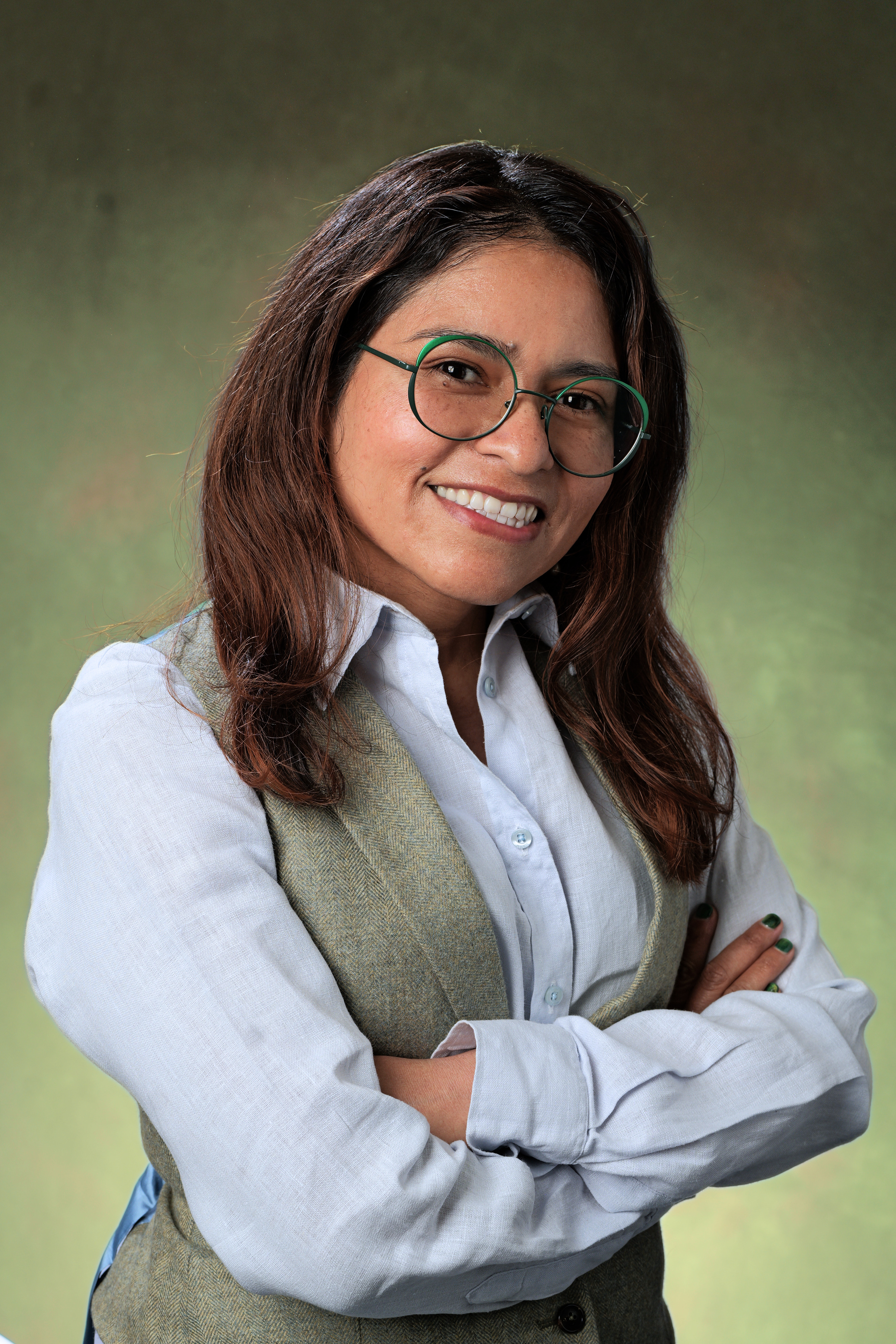
Airy Peralta
Ecologist | Climate Researcher | Pika Research Project
Born and raised in Southern Mexico, currently conducting research at the Niwot Ridge Long-Term Ecological Research site in Colorado's Rocky Mountains.
My Journey
I grew up in a small village in Southern Mexico, where I would escape to our rooftop to observe the remnant rainforest behind our house. Those early observations sparked a lifelong passion for wildlife conservation when I realized that the spider monkeys, green parrots, and macaws being sold as "pets" along the highway were victims of illegal trafficking.
From watching the blow of a Blue Whale against a crimson sunset over the Sea of Cortez to observing the bustle of American Pikas high in the Rocky Mountains, I've learned that the effects of human activity—both direct and indirect—touch every corner of our natural world.
Education & Research Path
Inspired by my heroes—Sir David Attenborough, Steve Irwin, and Jane Goodall—I pursued a Bachelor of Science in Marine Biology from the Autonomous University of South Baja California (UABCS) in La Paz, Mexico. During my undergraduate years, I explored diverse research areas including seabird monitoring, cetacean observation, and marine invertebrate biology.
My undergraduate thesis at the Interdisciplinary Center of Marine Science (CICIMAR) focused on Blue Whale behavior in Loreto Bay National Park. Using non-invasive monitoring methods, I studied how whale-watching and research boats affected Blue Whale respiration rates and diving patterns. This research earned me grants from both the Society of Marine Mammalogy and Cetacean International Society, and won third place at the 2014 Mexican Society of Marine Mammalogy congress.
From Ocean to Mountains
In 2016, I met Dr. Chris Ray from the University of Colorado Boulder, who introduced me to the American Pika Research Project. Since then, I've spent every summer at Niwot Ridge studying how climate change constrains pika distribution in alpine habitats. This opportunity opened my eyes to how anthropogenic activities indirectly affect species that rarely encounter humans—from accelerated climate change to nitrogen deposition effects.
My fieldwork led to a position as a field technician with the National Ecological Observatory Network (NEON), where I worked across Colorado ecosystems—from prairie to alpine—studying small mammals, invertebrates, plants, and soils. At NEON, I discovered geospatial science and remote sensing, which sparked a new dimension in my research approach.
Determined to integrate these tools into my ecological research, I enrolled at Front Range Community College in 2019 to pursue an Associate of Applied Science in Geospatial Science. There, I learned raster spatial analysis, geospatial statistics, and remote sensing techniques—skills that would become foundational to my graduate research methodology.
In 2020, I was awarded the National Science Foundation Graduate Research Fellowship, one of the most prestigious awards for early-career scientists. This fellowship enabled me to pursue my PhD at the University of Colorado Boulder, where I continue to build on my pika research and integrate geospatial tools with ecological modeling.
Current Research
I'm currently a graduate student at the University of Colorado Boulder and an NSF Graduate Research Fellow. My research integrates field ecology, statistical modeling, and geospatial science to understand how microclimatic patterns influence species persistence. I use computational tools and R programming to create predictive models that bridge the gap between weather station measurements and the fine-scale thermal environments organisms actually experience.
At the intersection of climate science and population ecology, my work examines how talus slopes create thermal refugia for alpine species, and how these microhabitats may buffer against rising temperatures in our changing climate.
Beyond the Lab
Science must extend beyond academia. Throughout my career, I've been committed to conservation outreach and education. From protecting Leatherback turtle nests from poachers in Baja California to teaching high school students about pika ecology at Niwot Ridge, I believe in inspiring the next generation of environmental stewards.
I've coached undergraduate students in R programming, led field trips for high school students through CU Boulder's Science Discovery program, and conducted science outreach for children in underserved communities. These experiences remind me that conservation requires not just research, but also community engagement and knowledge sharing.
Philosophy
My mother always told me, "Education is expensive, but it is more expensive to be ignorant." These words continue to drive me. I believe that understanding the smallest details of how organisms interact with their environment can reveal broader patterns about ecosystem resilience and our shared future on this planet.
There is nothing more captivating than wildlife observation, and anything that brings joy in a stressful world must be treasured and protected. Through integrating technology, statistics, and simulation of biological systems, we can learn to conserve our wildlife and, in turn, better understand ourselves and our future as a species.